

Following an in-person event in Zagreb last month, the Network and the Croatian National Lung Cancer Screening Program have assembled recommendations for advancing lung cancer screening implementation in Central and Eastern Europe (CEE).
During the Zagreb event, clinicians, researchers and policymakers shared lessons learnt from successes in implementing organised screening programmes. Discussions among the participants resulted in the following suggestions for practical next steps to advance lung cancer screening implementation in CEE and beyond:
- Comprehensively integrate primary care. A GP-led strategic approach, supported by high-quality training, can boost participation and ensure continuity of care across screening programmes.
- Collate robust cost-effectiveness data tailored to specific settings. This is essential to inform the development of screening programmes and help proactively engage policymakers and healthcare providers.
- Harness digital innovation. Analysis of how different digital technologies, including AI tools, may be applied to lung cancer screening, and how this may differ across settings, is essential to expedite their integration into clinical practice.
- Better embed smoking cessation support. Smoking cessation programmes – both within and outside of screening programmes – vary between countries, and their potential is often not fully realised. Lessons learned must be shared among stakeholders to improve practice.
- Consider the downstream impact. The introduction of screening programmes will have system-wide effects on surgical workload and incidental detection of other conditions. Thoughtful consideration and planning for such impact are critical.
- Utilise patient advocacy organisations. Partnering with patient organisations can help engage the wider lung cancer community, disseminate positive messaging about screening, and tackle the stigma associated with smoking and lung cancer.
- Leverage EU funding. EU funding can help ensure the sustainable implementation and expansion of screening programmes.
- Monitor and evaluate programmes. Systematic assessment and comparison of programmes using data and modelling is crucial to inform their refinement and adaptation, and can help answer a variety of research questions.
We hope that these practical considerations will accelerate the implementation of screening in the region.
We extend a heartfelt thank you to those who generously gave their time to participate in the event. If you want to learn more about lung cancer screening in the CEE region, please explore our interactive map.
The Network offered reimbursement for travel and accommodation for speakers at this event.
Recent news
Blog

Lung cancer: the looming economic crisis governments can’t ignore
Lung cancer carries a heavy cost – not only for the people diagnosed, but for health systems and economies alike.
Blog

Beyond lung cancer: how LDCT screening could reshape early detection
Health systems are under growing strain. The challenge is no longer simply how to treat illness, but how to detect it earlier and manage it more efficiently.
News
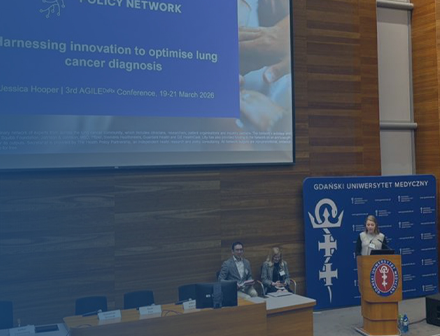
Insights from the I-ELCAP 3rd Annual AGILEᴰˣᴿˣ meeting
In March, the Network attended the International Early Lung Cancer Action Program 3rd Annual AGILEᴰˣᴿˣ meeting in Gdańsk, Poland.