

Lung cancer is a significant yet poorly understood health concern across Africa, and many cases are detected too late for effective treatment. Early detection through screening can change this, but Africa faces unique challenges – from limited data and infrastructure to diverse risk factors such as indoor air pollution and occupational exposure.
During a recent workshop convened by the Lung Cancer Policy Network at the invitation of the Bristol Myers Squibb Foundation, oncology experts from the Foundation’s Multinational Lung Cancer Control Program representing eight African countries charted a pragmatic path forward for earlier detection across the continent.
Why earlier detection matters
Management of lung cancer in any setting is complex, not least because symptoms typically appear only when the disease is at an advanced stage, when treatment options are limited and survival rates worse. Strong evidence shows that low-dose computed tomography (LDCT) screening can detect lung cancer at earlier, more treatable stages, significantly improving survival rates. Globally, 14 countries or territories have national or regional lung cancer screening programmes, and 8 others have made formal commitments to implementation. Africa is underrepresented in these efforts, highlighting a critical gap that must be addressed urgently.
The African context: high need, unique challenges
The risk profile of lung cancer across Africa is often unclear, with limited data impeding a clear picture of incidence, prevalence and mortality. Anecdotal evidence, included evidence shared by workshop participants, suggests that, compared with Western nations in particular, smoking is a lesser contributor to lung cancer rates. Experts at the workshop cited risks such as indoor cooking, occupational exposure and environmental exposure (including through mining activities) instead. These factors necessitate thoughtful, data-driven planning for lung cancer control, including eligibility for screening.
Shifting focus to earlier detection
Earlier detection of lung cancer has thus far remained a lower policy priority in many locations across the continent. And systems-level barriers to earlier detection persist, such as limited access to healthcare, lower awareness of lung cancer and its symptoms, and constraints in health systems financing. As our understanding of lung cancer in the region grows, there is both momentum and opportunity to raise its profile on the policy agenda. However, this must be supported by robust data and practical approaches to achieve earlier detection.
Prioritising earlier detection and screening for disease control has strong precedent in the region. There is much to learn from existing screening programmes in other conditions – for example, community-based tuberculosis screening is well established in many countries. Research activities led by workshop participants are exploring how integrating lung cancer screening into these existing tuberculosis programmes could offer a practical starting point. In the cancer space, existing cervical screening programmes may offer opportunities to leverage and translate lessons across for lung cancer screening.
Being mindful of ensuring lung cancer screening is a feasible opportunity, a stepwise approach – starting with pilots and gradually scaling to programme roll-out – was favoured by participants, to help showcase feasibility while ensuring programme capacity planning is carefully managed over months and years. Such an approach has been successfully implemented in other locations, for instance in England (in its National Lung Cancer Screening Programme).
Earlier detection efforts do not need to be limited to LDCT screening – indeed, adopting a wider range of strategies can prove optimal. These include raising awareness of lung cancer and its risk among the public and healthcare professionals, as well as incidental detection utilising AI to read existing scans. While the workshop focused on screening, participants emphasised the importance of taking a broader perspective that includes these additional strategies.
Balancing lung cancer with other health priorities
Implementing lung cancer screening across Africa requires both an aspirational vision and pragmatic, stepwise action. Taking steps towards the ultimate goal of implementing LDCT screening programmes requires coordinated and concerted action to ensure research informs policy and, in turn, is transformed into action. Integrating research into pilots and programmes can offer efficiencies on the path towards comprehensive lung cancer control.
Progress driven by workshop participants through their research and policy engagement is already facilitating the integration of lung cancer into national cancer control plans, the establishment and utilisation of registries, and the design of mobile screening initiatives. In several countries, direct collaborations between ministries of health, clinical expert groups and the Bristol Myers Squibb Foundation’s Multinational Lung Cancer Control Program is catalysing action – for example, to develop lung cancer screening guidelines in South Africa and define cancer screening eligibility in Ethiopia.
A vision for Africa
The path forward for lung cancer screening across Africa is clear: set an ambitious vision for early detection, but accompany it with pragmatic, context-specific steps. Priorities identified with workshop participants include:
- building political will by making lung cancer a policy priority – harnessing global commitments such as the WHO’s integrated lung health resolution and opportunities to embed lung cancer in national cancer control planning
- starting small with pilot programmes in high-risk areas, using available resources
- investing in workforce and technical capacity and infrastructure, identifying ways to best utilise existing resources while planning for the future
- engaging communities to ensure programmes are accessible and acceptable
- embedding research into pilots and programmes to build capabilities and evidence while avoiding delay to programme set-up
- establishing robust data systems to monitor progress and inform scale-up.
By combining aspiration with practical action, Africa can move towards a future where lung cancer is detected early, treated effectively, and survival rates are dramatically improved.
Recent news
Blog

Lung cancer: the looming economic crisis governments can’t ignore
Lung cancer carries a heavy cost – not only for the people diagnosed, but for health systems and economies alike.
Blog

Beyond lung cancer: how LDCT screening could reshape early detection
Health systems are under growing strain. The challenge is no longer simply how to treat illness, but how to detect it earlier and manage it more efficiently.
News
Insights from the I-ELCAP 3rd Annual AGILEᴰˣᴿˣ meeting
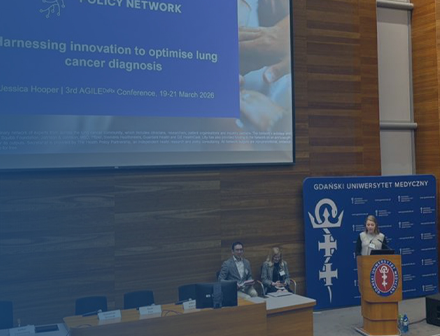
In March, the Network attended the International Early Lung Cancer Action Program 3rd Annual AGILEᴰˣᴿˣ meeting in Gdańsk, Poland.