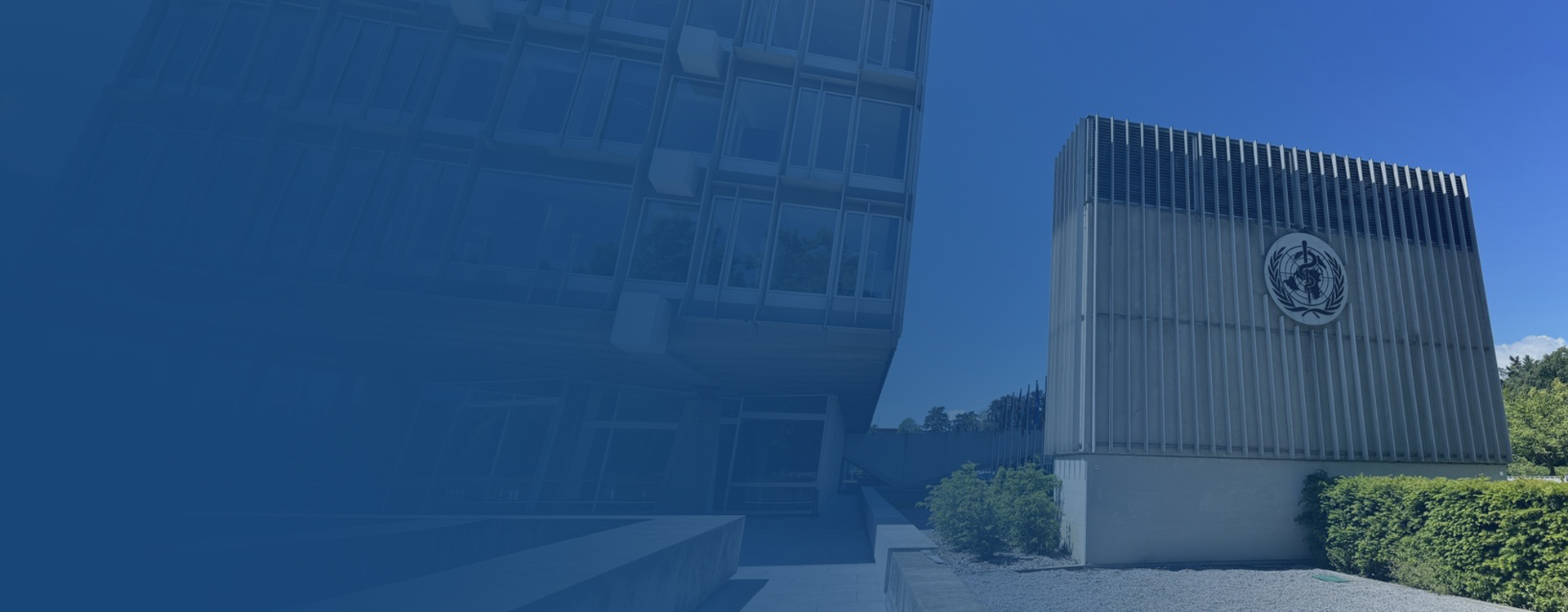
The Network joined global health leaders at the 79th World Health Assembly in May to advance a shared priority: translating growing political ambition on lung cancer into measurable, system-wide progress.
At a series of high-level roundtables, discussions and workshops, a consistent message emerged: that global momentum on lung cancer is strong, but implementation is still a challenge.
Strengthening accountability through KPIs
One focus of the Network’s contribution was the need for key performance indicators (KPIs) to drive accountability. We were pleased to co-host a workshop, led by The Swedish Institute for Health Economics, on how governments and health system leaders can track progress on policy commitments such as the lung health resolution and lung cancer consensus statement.
A pilot lung cancer framework – which was developed through international consultation and tested in several countries – was highlighted as a critical mechanism to foster robust accountability. The workshop explored how to take the framework to its next phase so it can inform the development and adoption of KPIs for lung cancer.
Reframing lung cancer within integrated lung and NCD agendas
A clear theme of integrating lung health policy agendas ran through the assembly, reinforcing lung cancer’s position in the lung health resolution within an integrated approach to communicable and non-communicable diseases lung conditions (NCDs).
Solidifying this commitment, the Ministry of Health of Malaysia, the Union for International Cancer Control (UICC), the International Union Against Tuberculosis and Lung Disease, and the Forum of International Respiratory Societies – along with representatives from Brazil, Kenya, the Philippines and the NCD Alliance – came together to mark the anniversary of the resolution.
The anniversary event showcased how early diagnosis, improved access to medicines, and whole-of-person care rooted in primary health systems are being implemented. Speakers also emphasised that prevention and early detection must be reframed as not only public health priorities, but also cost-saving investments for health systems.
The UICC’s Lung Cancer Collaboration led further sessions to bridge the gap between organisations focusing on different components of lung health. A Another event, hosted by the UICC and the Clean Air Fund, echoed these sentiments and looked at the role of clean air in reducing risk and improving outcomes for many lung conditions.
There was strong consensus throughout these events that, if we are to address these challenges effectively, integration of lung health policies must occur at every level: policy, financing, service delivery and community engagement.
Moving beyond commitments: realising implemtation
The lung cancer community’s focus remains on bridging the gap between global alignment and national delivery. While commitment frameworks provide direction, this year’s assembly emphasised the need for locally adaptable tools to promote accountability and track progress across diverse health systems.
The Network will continue to work with our partners to ensure that policy ambition translates into better outcomes for everyone affected by lung cancer.
Recent news
News

Turning lung cancer policy into action at WCLC 2026
At this year’s World Conference on Lung Cancer (WCLC), the Network will host two sessions designed bridge this gap: one focused on the skills needed to influence policy, and the other on the financing and delivery of lung cancer priorities in practice.
News
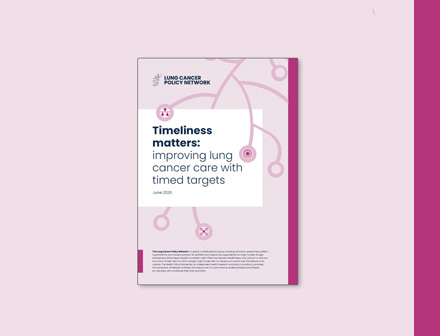
Delays in lung cancer care addressed in new policy brief on timed targets
Timed targets set time frames for diagnosis, treatment and other aspects of care, and are a practical way to improve outcomes and accountability.
Case study

A radiology-led model for LDCT in Norway: the first pilot programme
Norway’s pilot programme stands out for its radiology-led model, which substantially reduced the workload for respiratory services.