
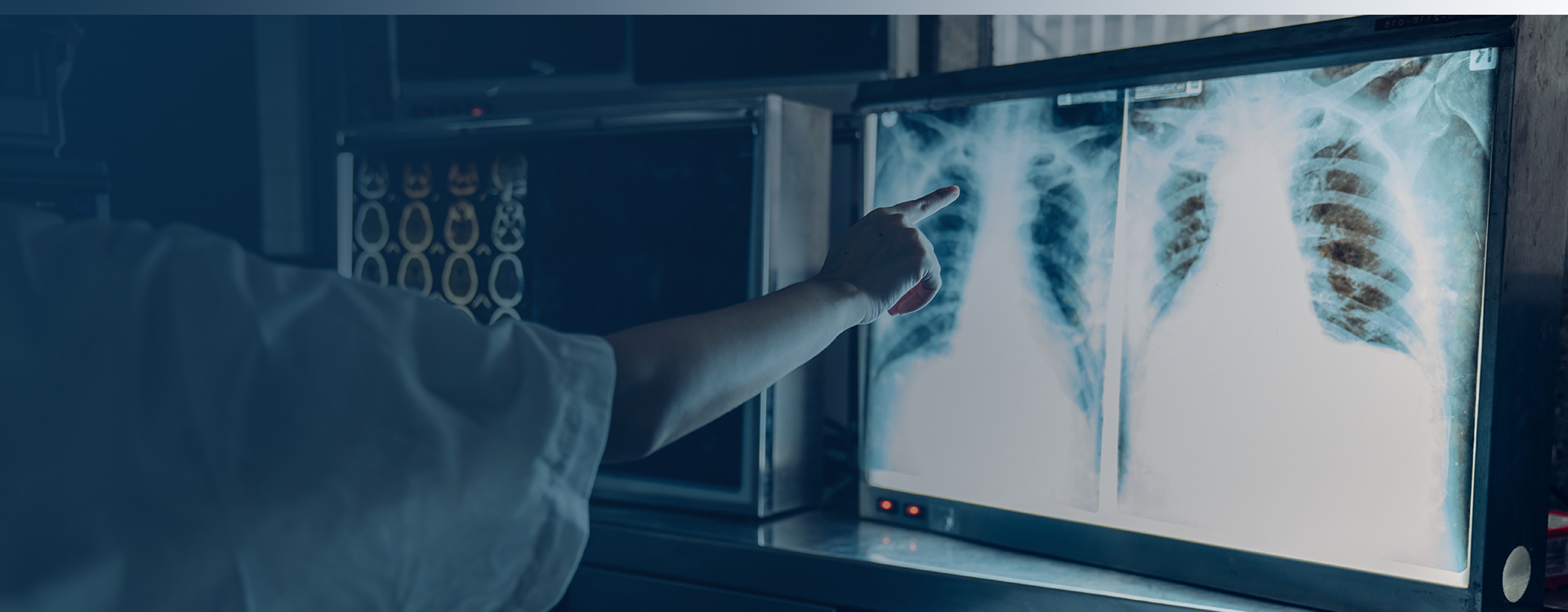
Every day, lung nodules are picked up on scans carried out for other reasons. Most are harmless. But a small proportion are lung cancer, and managing them well offers a route to earlier diagnosis – including for people who would never be eligible for screening.
Whether you are new to incidental pulmonary nodules (IPNs) or planning a programme to manage them, we’re answering some of the most common questions about IPNs. Learn about why the effective management of IPNs can lead to earlier lung cancer diagnoses, what ‘good’ management looks like, and what you need to do to set up your own IPN management programme.
What is an incidental pulmonary nodule?
Incidental pulmonary nodules are small lesions in the lung, up to 30mm in diameter, that are found unexpectedly on medical imaging. They can appear on any computed tomography (CT) scan or X-ray that captures part of the lung. This includes scans of the head and neck, heart or abdomen. They are also commonly found when people attend an emergency department. ‘Incidental’ means the nodule was not what the original scan was looking for. Nodules found through lung cancer screening with low-dose computed tomography (LDCT) are not classed as IPNs, because finding them is the purpose of the original scan.
How common are IPNs?
IPNs are estimated to be present in up to 50% of the adult population, but this varies depending on population demographics.
Does having an IPN mean someone has lung cancer?
In most cases, an IPN doesn’t mean someone has lung cancer. Most IPNs are benign and can be caused by things like previous infections, autoimmune diseases or exposure to pulmonary irritants. But an estimated 1.5% indicate lung cancer. But with an estimated 10 million IPNs detected worldwide every year, even this small percentage represents a huge number of people whose lung cancer could potentially be diagnosed earlier.
Why does managing IPNs matter?
Managing IPNs well can help detect lung cancer earlier, when more treatment options are available and survival is higher than when it is diagnosed at a late stage. A formal IPN management programme makes use of imaging that already exists to detect lung cancer. And unlike screening, which is not available everywhere and is also currently offered only to people who meet high-risk eligibility criteria, IPN management can reach anyone whose scan happens to capture part of the lung. For example, an IPN management programme in the Mississippi Delta found that almost half of people diagnosed with lung cancer through the programme were ineligible for screening – demonstrating the importance of a multi-pronged approach that includes IPN management to facilitate earlier detection of lung cancer.
How well are IPNs currently managed?
Many people who have IPNs noted on imaging do not receive appropriate follow-up care. Numerous studies have found that without robust management protocols in place, only 36–52% of people receive appropriate follow-up care for their IPNs. In Denmark, 2.5% of people diagnosed with stage IV lung cancer could have been diagnosed at an earlier and more treatable stage if they had received appropriate follow-up for their IPNs.
Even when follow-up care is offered, people with IPNs are often ‘lost’ in the process. This means that they have discontinued follow-up care and are no longer contactable by the health system. This can be due to a wide range of reasons, such as administrative delays or errors, cancelled or missed appointments, care transitions, a change of address or contact information, or just a lack of understanding of the need for follow-up care. People from underrepresented or marginalised ethnic backgrounds, and those with limited health literacy or proficiency in the language their health system uses, are also particularly vulnerable to being lost. Therefore, even if IPN management programmes are in place, additional considerations are needed to ensure people with IPNs receive their follow-up care.
How should IPNs be managed?
IPNs can be managed using a range of approaches, but the core elements are ‘finding, tracking and managing’. Finding is about how IPNs are detected on imaging and how their risk is assessed to guide follow-up care. Tracking is about making sure people in IPN management programmes are not ‘lost’ during their follow-up care. Managing is about the follow-up care people receive, such as further diagnostic investigations.
Several clinical guidelines outline how IPNs should be managed. They describe how to assess the risk of each nodule and the follow-up care that should come next. This usually means repeat scans and further diagnostic testing if a nodule is assessed as high risk.
Does IPN management lead to unnecessary anxiety and tests?
As with all healthcare procedures, it is important to balance the risks of ongoing IPN management – such as radiation exposure from repeat CT scans, pneumothorax (collapsed lung) from biopsies or complications from surgery – with the potential benefits of diagnosing lung cancer earlier where survival rates greatly increase and more treatment options are available.
Guidelines provide clear protocols to assess the need for IPN management and additional medical procedures based on an individual’s risk of developing lung cancer. This is calculated from a nodule’s size, shape and location, as well as the person’s medical history, including tobacco use, occupational and environmental exposures, family history, and comorbidities.
Even with this balance of risks, undergoing follow-up care for IPNs can induce anxiety and stress in people. Across different studies, around half of people reported increased emotional distress and anxiety following the identification of an IPN. It is therefore important for healthcare providers to supply people with clear information about IPNs to alleviate these reported concerns – the provision of a factsheet to people with IPNs informing them about pulmonary nodules reduced anxiety and improved understanding about personal health in 83% and 95% of the cohort respectively.
What does a health system need to manage IPNs?
IPN management programmes need less planning and resourcing than you might expect, and considerably less than a formal LDCT screening programme. This makes them a practical earlier detection strategy where screening has not yet been implemented or is not feasible.
Key resources needed for effective IPN management programmes include a CT scanner, an electronic medical record, and a picture archiving and communication system (PACS). Additional resources and infrastructure can make programmes more efficient and effective, but they are not essential for finding, tracking and managing IPNs.
How does IPN management fit alongside screening for lung cancer?
LDCT screening for lung cancer is a cost-effective way to detect lung cancer earlier in people at high risk, and its survival outcomes are slightly better than those seen in IPN programmes.
However, LDCT screening is not available in many countries and is only open to people who meet eligibility criteria that indicate they are at high risk. Analyses of people diagnosed with lung cancer have found that more than half were ineligible for screening, meaning alternative detection strategies – such as IPN management programmes – are needed to detect lung cancer earlier in the entire population.
IPN management is not a replacement for screening. It works alongside screening and needs less resourcing, planning and policy change.
How can I set up an IPN management programme in my health system?
The Lung Cancer Policy Network’s Implementation toolkit for IPN management programmes, launching later in October 2026, will help you set up an IPN management programme in your own health system. It will guide you through assessing whether your health system is ready, then support you with designing, planning and implementing a programme that works with the resources you have.
To find out more about managing IPNs effectively and what health systems can do to build and strengthen IPN management pathways, explore our report and report summary.