
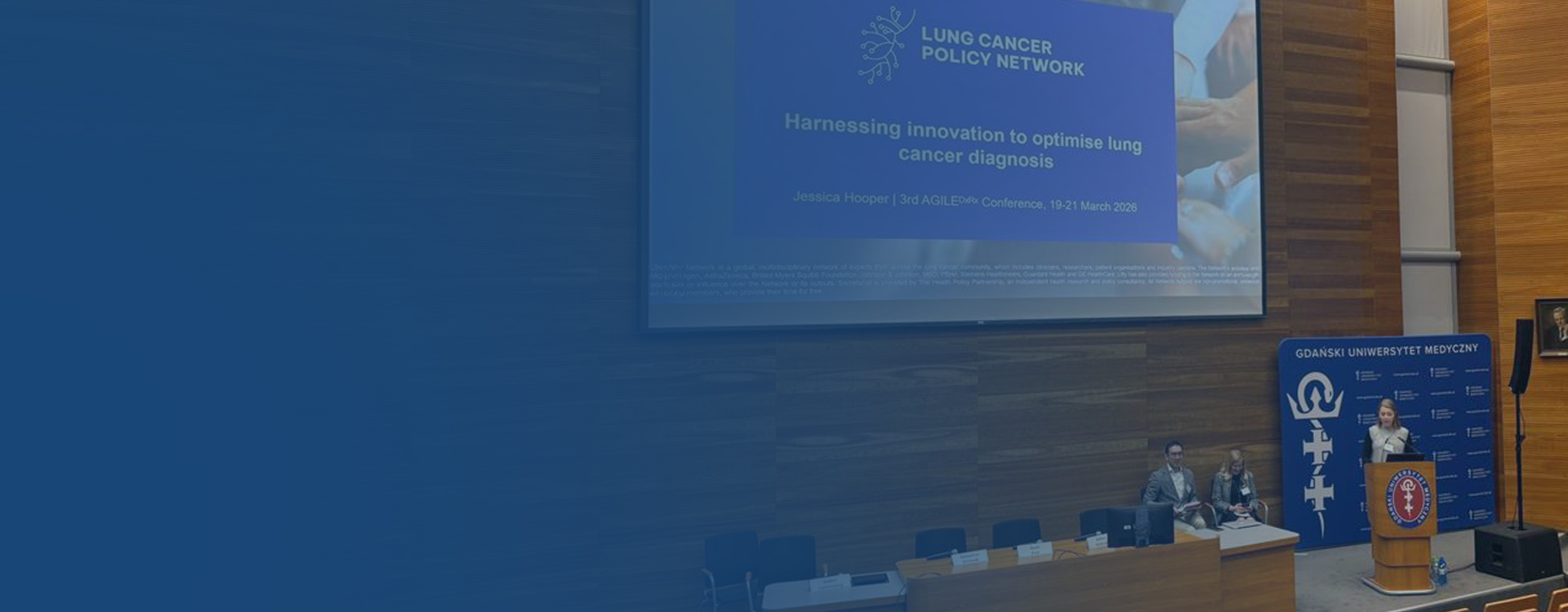
Earlier this month, the Network attended the International Early Lung Cancer Action Program 3rd Annual AGILEᴰˣᴿˣ meeting in Gdańsk, Poland.
A long-standing Network member organisation, I-ELCAP is a screening programme that began enrolling participants in 1992; it now includes over 80 sites worldwide. I-ELCAP’s mission is to achieve early diagnosis, treatment and ultimate cure of lung cancer through the dissemination and advancement of research. And for the last three years, I-ELCAP and AGILE – the Alliance for Global Implementation of Lung and Cardiac Early Disease Detection and Treatment – have hosted meetings to share the latest evidence and advance progress.
To continue the conversation on tackling lung cancer – the leading cause of cancer deaths worldwide – the Network Secretariat was pleased to:
- present on diagnostic updates and share recommendations from the Network’s report Harnessing innovation to optimise lung cancer diagnosis for better equity, access and outcomes
- join a panel discussion on the AGILE mission in Central and Eastern Europe, highlighting the importance of robust data collection, national cost‑effectiveness studies and the infrastructure needed to support the roll-out of screening
- share an e-Poster demonstrating how data from the Network’s interactive map can support the implementation of screening programmes.
We heard from a wide range of experts and contributed to excellent discussions about how to strengthen lung cancer screening and early detection efforts, including:
- learning from established screening programmes, including ways to improve implementation and refine recruitment strategies and eligibility criteria
- maximising research in screening programmes to understand the future of multi‑disease chest CT screening for lung cancer, coronary artery calcification and emphysema – including the role of AI tools
- integrating research for emerging technologies that could optimise screening programmes, including the readiness of biomarkers for use in clinical practice
- advancing research on new therapeutic approaches and the need to monitor treatment effectiveness
- driving advocacy and collaboration to accelerate progress and provide care based on the latest evidence.
Discover our work on earlier detection