
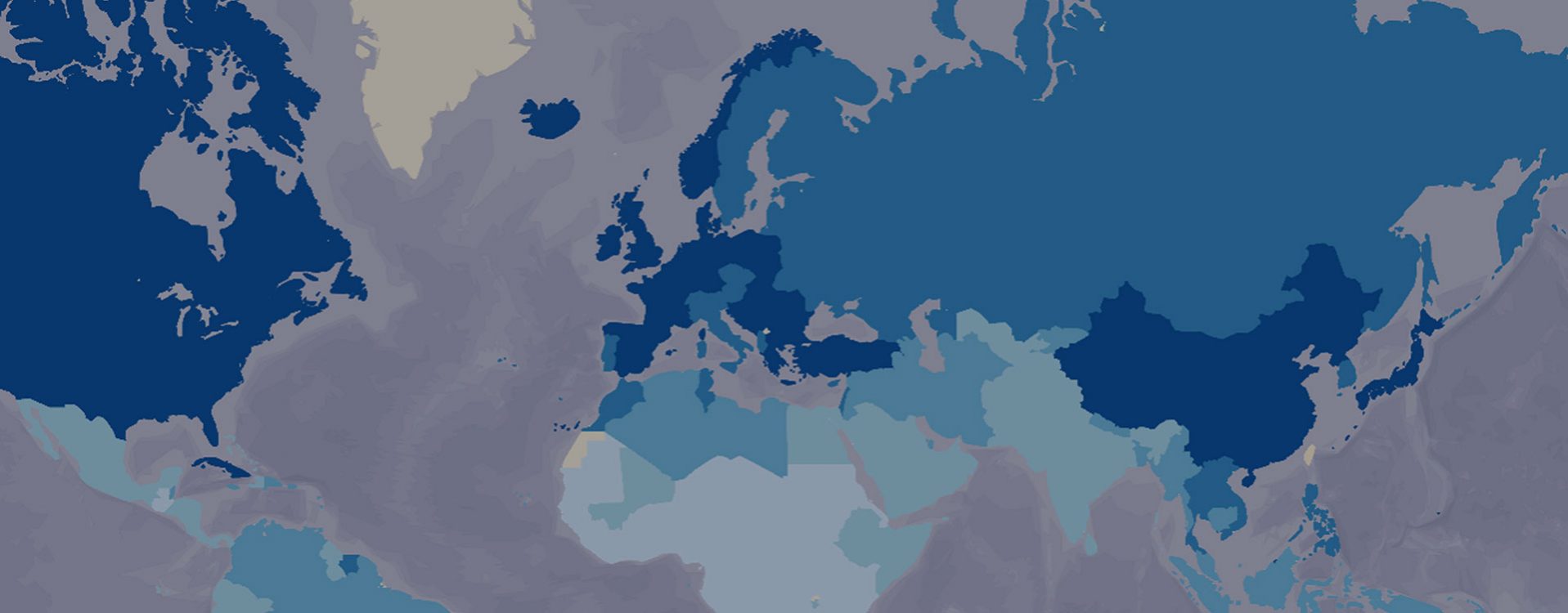
The Lung Cancer Policy Network is proud to announce the launch the interactive map of lung cancer screening implementation.
The map is the first global database that collates ongoing and completed implementation research for low-dose computed tomography (LCDT) screening. The aim of the interactive map is to facilitate the sharing of best practice and to guide policy development around using LCDT screening to detect lung cancer.
Users have access to two maps that can be used to explore data on LDCT lung cancer screening:
- a pin map providing an overview of ongoing and completed clinical trials, implementation studies and national or regional LDCT screening programmes globally
- a heat map displaying the policy context for lung cancer and LDCT screening in each country.
Early detection of lung cancer by LDCT screening of healthy, high-risk people can help save lives and reduce the considerable burden of lung cancer on societies. Network member Professor Dorothy Keefe, CEO of Cancer Australia, said:
The map is a comprehensive resource for policymakers, researchers and lung cancer advocates to support early detection via screening. We anticipate it being used to support policy discussions on the evidence-base for screening implementation. It can also be used to build on lessons learnt by providing an overview of key implementation activity.
Developed in close consultation with our Network members, this map has been populated from a global review of both peer-reviewed and grey literature, as well as insights gathered from study and programme leads. Network member Professor David Baldwin of the University of Nottingham, UK, said:
As the map is a living resource, the scope of its inclusion criteria will be expanded in future editions.
Recent news
News

Insights from the 79th World Health Assembly
The Network joined global health leaders at the 79th World Health Assembly in May to advance a shared priority: translating growing political ambition on lung cancer into measurable, system-wide progress
Blog

From commitment to action: what has changed a year after the WHO lung health resolution?
To shift from political recognition to measurable improvement for patients, countries need to adopt an implementation‑oriented approach.
News

England’s lung cancer screening programme: lessons from a national roll-out
A new article in Nature Medicine presents findings from the first five years of the NHS screening programme for lung cancer in England, and the results are striking.