

Overview of Domain 4
It is essential to define the eligibility criteria and recruitment process for a screening programme ahead of implementation. Domain 4 draws attention to targeted approaches that can help secure attendance from those who may be at highest risk of lung cancer. The recruitment process must also take into consideration health inequalities that can both increase the risk of lung cancer and make it difficult for people to undergo screening. As such, this domain also encourages users of the framework to think about the cultural sensitivity of the screening programme.
Assessment framework key questions
In this domain, metrics are designed to assess:
Defining the eligible population
How to define the population eligible for lung cancer screening, including:
- assessing the epidemiology of lung cancer in the population and the risk factors
- the proposed eligibility criteria for the screening programme
- methods to identify the target population
Engaging the target population
- the informational needs of the target population to make an informed decision on participating in screening
- whether the programme is culturally sensitive for all groups at high risk of lung cancer
- the process for recruitment, including the different ways to access screening
Engaging healthcare professionals in recruitment
- the engagement of healthcare professionals involved in referring the target population
- what resources may be required to support healthcare professionals in assessing eligibility for screening
Domain resources
Policy brief: a focus on eligibility and recruitment
Download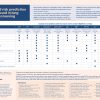
Reference: selected risk prediction models used in lung cancer screening
Download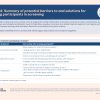
Summary: potential barriers to and solutions for engaging participants in screening
Download
Template: understanding which populations might be at the highest risk of lung cancer
Download
Template: tailoring LDCT lung cancer screening to increase engagement with traditionally underserved communities
Download
Case study: England
Download
Case study: Aotearoa New Zealand
DownloadThe policy brief
When planning for a screening programme, it is important to determine who will be eligible and how healthcare professionals will be supported to deliver the programme, and to ensure the programme design helps address inequities in lung cancer. To help those planning to implement screening programmes, we have published a policy brief focusing on the importance of eligibility and recruitment.
Further reading
- Implications of 9 risk prediction models for selecting ever smokers for CT lung-cancer screening (Katki et al. 2018)
- Lung cancer risk calculators (Brock University)
- Risk-based lung cancer screening: a systematic review (Toumazis et al. 2020)
- Participation in lung cancer screening (Baldwin et al. 2019)
- Interventions designed to increase the uptake of lung cancer screening: an equity-oriented scoping review (Sayani et al. 2023)
- Rapid review of evaluation of interventions to improve participation in cancer screening services (Duffy et al. 2017)
- Bridging the gap: The challenge of mitigating health inequalities in lung cancer (UK Lung Cancer Coalition, 2022)
Professor Sue Crengle, University of Otago